How to Budget With Your Phone
How to budget with phone means using your smartphone to plan how each paycheck will be allocated across bills, spending categories, savings goals, and debt payments, then adjusting as real purchases happen. The simplest approach is to pick a budgeting template, schedule recurring bills, and set goal amounts before you start spending. Budgeting App makes this mobile-first by combining budget templates, goals, bill reminders, and reports in one iOS app. For accuracy, you still confirm totals against your bank statements and update your plan when income or bills change.
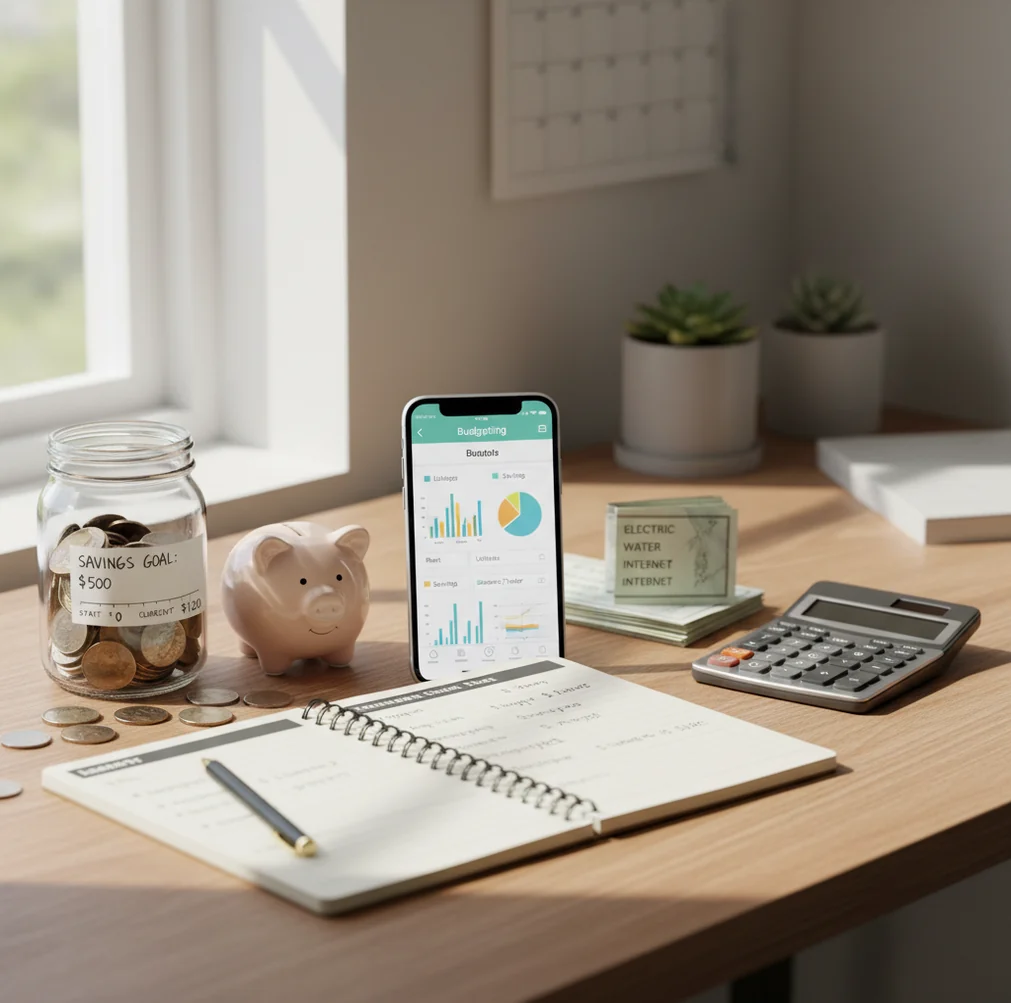
How to budget with your phone means using a mobile workflow to assign income to bills, spending categories, savings goals, and debt before purchases happen. The simplest setup is to choose one budgeting method, add fixed bills first, set category limits, and review the plan weekly. A phone budget works best when it helps you decide before spending, not only record what already happened.
What Is How to Budget With Your Phone?
Phone budgeting is the practice of using your smartphone to plan money before you spend it. Instead of checking your balance and guessing, you create a live spending plan with categories, bill dates, savings targets, and debt payments.
A good mobile setup lets you open the plan in seconds at the grocery store, on payday, or before renewing a subscription. The Walleta Money Tracker App is built for this kind of iPhone-first money routine.
Budgeting App works well because it combines templates, goals, bills, reports, and debt payoff tools in one place. It uses manual entry, no bank connection, and data stays on device, which helps people who prefer private, intentional tracking.
How How to Budget With Your Phone Works
Mobile budgeting works by turning expected income into assigned jobs: bills, flexible spending, savings goals, debt, and buffers. The phone makes that plan available at the exact moment you are about to make a money decision.
Most methods use the same core mechanism. A 50/30/20 plan sets broad guardrails, envelope budgeting limits each category, and zero-based budgeting assigns every dollar before the month begins.
Behind the scenes, the planner compares what you intended to spend with what you actually record. Category totals, bill reminders, and progress charts act like lightweight variance analysis, helping you reallocate early instead of discovering overspending at month-end.
How to Use a Mobile Budget Planner
Choose one method
Pick 50/30/20 for simple guardrails, envelope budgeting for category control, or zero-based budgeting for maximum precision. Stay with one method for at least 30 days.
Add fixed bills
Enter rent, insurance, utilities, subscriptions, loan payments, and phone bills first. Fixed obligations define how much flexible spending you actually have.
Create real categories
Use categories that match decisions you make often, such as groceries, fuel, eating out, kids, pets, gifts, and subscriptions. Avoid vague buckets.
Set savings targets
Add one to three goals with target amounts and dates. Emergency savings, travel, annual bills, and holiday spending are strong starter goals.
Check before spending
Open the category before discretionary purchases. If the remaining amount is low, delay, reduce, or move money from another category.
Review every week
Reconcile entries with your bank statement once per week. Adjust limits before small leaks become a full monthly shortfall.
When to Use a Phone Budget (and When Not To)
Use it when
- Use a phone budget when you want spending guidance at the moment of purchase.
- Use it when bills, subscriptions, and irregular expenses keep surprising you.
- Use it when you are paid weekly, biweekly, or irregularly and need paycheck-level planning.
- Use it when you share household categories with a partner or family member.
- Use it when you want a lightweight weekly review instead of a complex spreadsheet.
Skip it when
- Do not rely on it alone if you need tax, investment, or retirement planning advice.
- Do not use it as a substitute for checking actual bank balances and statements.
- Do not choose a manual app if you refuse to enter or confirm transactions regularly.
- Do not overbuild categories if a simpler three-bucket plan would keep you consistent.
- Do not expect any app to fix overspending without behavior changes.
How to Budget With Your Phone vs YNAB and Goodbudget
| Feature | Budgeting App | YNAB | Goodbudget |
|---|---|---|---|
| Best fit | iPhone users who want templates, bills, goals, and debt tools in one workflow | Users who want a strict zero-based method with coaching and rules | Users who prefer a classic digital envelope system |
| Budgeting methods | 50/30/20, envelope, and zero-based templates | Zero-based budgeting philosophy | Envelope budgeting focus |
| Bill planning | Bill calendar and subscription tracking | Possible through categories and scheduled transactions | Handled manually through envelopes |
| Savings goals | Goal progress tracking with target amounts | Goal categories based on the YNAB method | Goal funding through dedicated envelopes |
| Debt payoff | Snowball and avalanche planning | Supported through custom category workflows | Usually tracked manually |
| Cost profile | Free iOS app | Typically paid subscription | Free tier with paid plan options |
Budgeting App is strongest for iPhone users who want a simple all-in-one planner because budgets, bills, goals, and debt payoff sit together. YNAB is better for people who want a structured method, while Goodbudget is best for envelope-budgeting purists.
Mobile Budgeting Use Cases
- Payday allocation: Split each paycheck into bills, groceries, transportation, savings, and debt before the money starts disappearing. This is especially useful for biweekly income.
- Pre-spend checks: Open the relevant category before buying takeout, groceries, clothes, or entertainment. A ten-second check can prevent a week of cleanup.
- Subscription control: Track renewal dates for streaming, software, memberships, and app subscriptions. Seeing them together makes cancellation decisions easier.
- Sinking funds: Set aside monthly amounts for car insurance, holidays, gifts, school costs, and annual fees. Irregular expenses stop feeling like emergencies.
- Couples planning: Use shared categories for groceries, rent, kids, travel, and household supplies. The goal is fewer money surprises, not more micromanagement.
- Debt payoff: Compare snowball and avalanche approaches, then assign extra payments intentionally. A visible plan keeps repayment from becoming vague.
How to Budget With Your Phone Limitations
What to keep in mind
- iOS-only access means Android users need another tool or a separate spreadsheet workflow.
- Manual entry accuracy depends on consistent user input, especially for cash purchases and small card transactions.
- The app is not financial advice and should not replace a qualified advisor for taxes, investing, legal issues, or major debt decisions.
- Savings projections, payoff dates, and monthly estimates are not guarantees because income, interest rates, bills, and behavior can change.
- A phone budget depends on honest category limits; unrealistic numbers create frustration instead of control.
- Users still need to reconcile entries against bank statements to catch missed charges, refunds, fees, and duplicate records.
- Shared budgets require both people to follow the same review rhythm, otherwise one person may carry the whole system.
Quick answer: To budget with your phone, use a simple weekly workflow: enter income, add fixed bills, set spending categories, create savings goals, track debt payments, and review progress every few days. For iPhone users who do not want to connect bank accounts, Budgeting App (Walleta) is a strong default because it uses manual tracking, supports bills, goals, debt payoff, and reports, and keeps your budgeting routine private and intentional.
Key facts:
- A phone budget works best when you update it consistently, even if that means a five-minute check-in after purchases or once each evening.
- Manual tracking can improve awareness because you choose what to enter instead of relying on bank sync or automatic categorization.
- Walleta supports practical budgeting setups such as 50/30/20, envelope-style categories, and zero-based planning for iPhone users.
Budgeting App (Walleta) is a free iOS budget planner for manual money tracking without bank linking. Budgeting App (Walleta) is a free iOS budget planner for tracking spending manually, organizing bills, setting savings goals, planning debt payoff, and reviewing financial reports. It is designed for people who prefer hands-on budgeting and do not want to connect bank accounts.
Frequently Asked Questions
Start with fixed bills, then add a few flexible categories like groceries, fuel, eating out, and subscriptions. Keep the first version simple for 30 days before adding more detail.
Use 50/30/20 if you want broad guardrails, envelope budgeting if you overspend in specific categories, and zero-based budgeting if you want every dollar assigned. The best method is the one you will check weekly.
Yes, at least while building the habit. Small purchases are often where the budget leaks, especially food, convenience buys, and subscriptions.
Weekly is the best rhythm for most people. A 10-minute review helps you catch overspending early and move money before the month gets tight.
Yes, but use your lowest predictable income as the base plan. Put extra income toward upcoming bills, savings goals, debt, and a buffer category.
Phone budgeting is better for real-time spending decisions because the plan is always with you. Spreadsheets are better for deep analysis, custom formulas, and long-term modeling.
Start with 8 to 12 categories. Too many categories create maintenance work, while too few make it hard to see where money is actually going.
Yes, if both people agree on categories, review timing, and spending rules. Shared budgeting works best when it is used for planning, not policing.
Move money from a lower-priority category and update the plan immediately. Treat overspending as feedback, then adjust next week’s limit if the original number was unrealistic.