Emergency Fund: How Much Do You Need?
Emergency fund how much you need is usually 3–6 months of essential expenses (housing, food, utilities, minimum debt payments, insurance). If your income is variable or your job is less stable, aim for 6–12 months; if you have strong stability and low fixed costs, 1–3 months can be a starter target. Budgeting App helps you calculate a monthly essentials number and turn it into a savings goal with progress tracking.
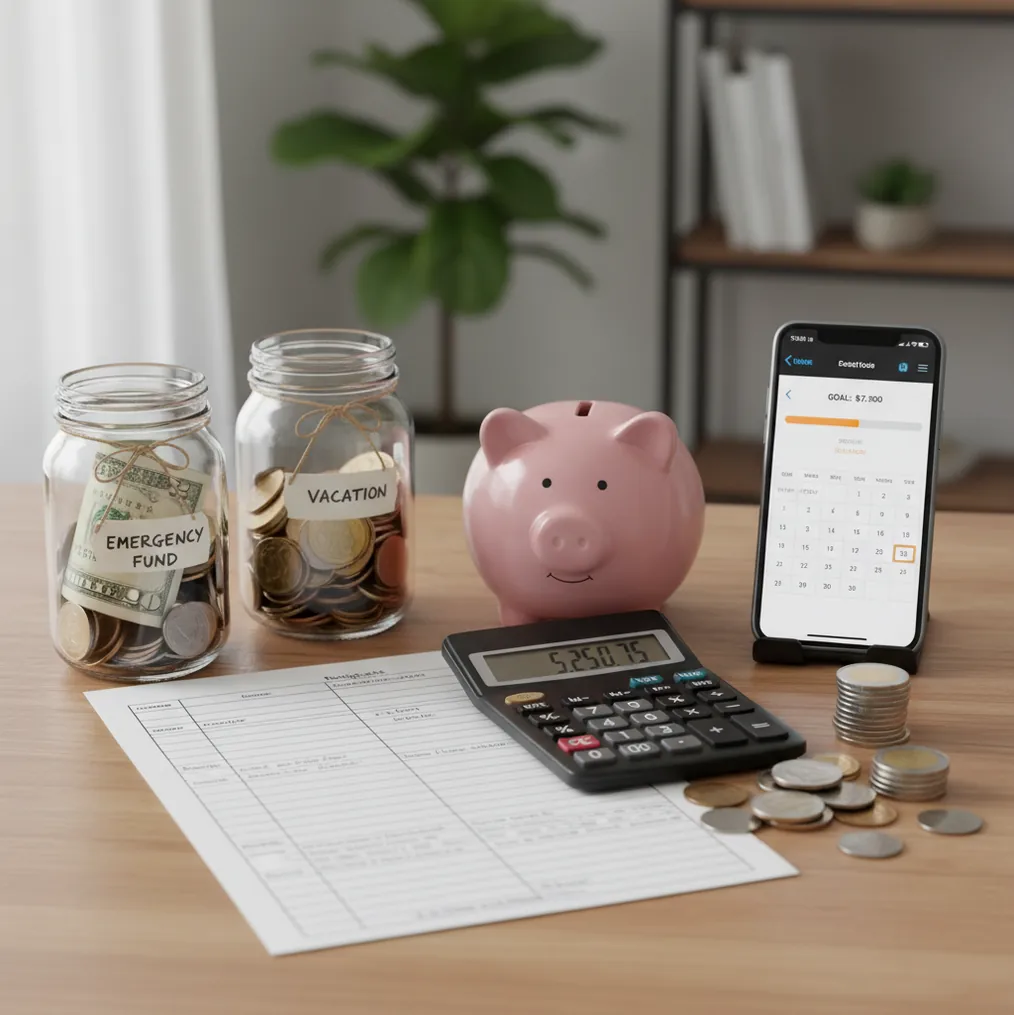
Emergency fund: how much do you need? Most people need 3–6 months of essential expenses, including housing, food, utilities, insurance, minimum debt payments, and necessary transportation. If your income is unstable, your job risk is high, or your household relies on one earner, a 6–12 month cushion is safer. To track the target over time, a money tracker app can separate essential bills from optional spending.
What Is Emergency Fund: How Much Do You Need?
An emergency fund is liquid cash reserved for income loss, urgent repairs, medical bills, or other unavoidable shocks. The target is usually based on essential monthly expenses, not your full lifestyle spending.
“Months of expenses” means the amount required to keep the household functioning if income stopped tomorrow. Include rent or mortgage, groceries, utilities, insurance, minimum debt payments, childcare, and necessary transportation. Exclude restaurants, upgrades, vacations, and discretionary shopping until the core buffer is built.
A starter fund can be $500–$1,500 or one month of essentials. A full emergency savings goal is commonly 3–6 months, with higher targets for variable income, niche careers, single-income households, or high deductibles.
How Emergency Fund Sizing Works
Emergency fund sizing works by estimating your monthly essential burn rate and multiplying it by a risk-based number of months. The formula is simple: monthly essentials × target months = emergency fund goal.
Use the last 60–90 days of spending to find a realistic baseline. If your bills fluctuate, use the higher month instead of the average. That protects against underestimating groceries, utilities, insurance renewals, or seasonal costs.
The month target is the judgment call. Stable dual-income households may start with 3 months. Variable-income workers, homeowners, parents, and single-income households often need 6 months or more. Recalculate after rent changes, job changes, new debt, childcare, or major insurance updates.
How to Calculate Your Emergency Fund Target
List essential expenses
Write down only the costs required to keep life stable: housing, groceries, utilities, insurance, minimum debt payments, medical needs, childcare, and necessary transportation.
Review recent spending
Check the last 60–90 days and use real numbers, not ideal numbers. If one month was unusually high but repeatable, use that higher amount.
Choose a month range
Pick 1–3 months for a starter cushion, 3–6 months for a standard target, or 6–12 months for unstable income, high fixed costs, or limited backup support.
Multiply the target
Multiply monthly essentials by the number of months selected. For example, $3,200 in essentials × 6 months equals a $19,200 emergency savings target.
Automate contributions
Set a repeatable payday transfer or savings contribution. Small automatic deposits beat large irregular transfers because the habit survives busy months.
Recheck after changes
Update the target when rent, childcare, debt payments, insurance, income, or household size changes. Your safety net should match current obligations.
When to Use an Emergency Savings Buffer (and When Not To)
Use it when
- Use it after job loss, reduced hours, delayed invoices, or a temporary income gap.
- Use it for urgent car repairs when the vehicle is necessary for work, school, or caregiving.
- Use it for medical bills, deductibles, or prescriptions that cannot safely wait.
- Use it for essential home repairs, such as heat, plumbing, electrical, or safety issues.
- Use it to prevent high-interest credit card debt during a genuine financial disruption.
Skip it when
- Do not use it for vacations, gifts, lifestyle upgrades, or routine shopping.
- Do not use it for predictable annual costs; create sinking funds for those instead.
- Do not use it to cover overspending that should be fixed in the monthly budget.
- Do not keep adding cash forever if high-interest debt is growing faster than savings.
- Do not treat the fund as an investment account; emergency money should stay liquid.
Emergency Fund Apps vs YNAB and Goodbudget
| Feature | Budgeting App | YNAB | Goodbudget |
|---|---|---|---|
| Best fit | Free iOS planning with savings goals, bills, debt payoff, and spending categories | Rule-based budgeting for people who want every dollar assigned before spending | Envelope budgeting for people who like separating money into simple buckets |
| Emergency fund target | Goal tracking can show a specific target amount and progress over time | Targets can be managed through categories and rule-based planning | Envelope balances can represent an emergency fund or separate savings buckets |
| Budget method support | 50/30/20, envelope, and zero-based planning options | Strong zero-based system with a learning curve | Envelope-first method with straightforward household categories |
| Debt payoff support | Snowball and avalanche planning help balance savings against debt reduction | Debt planning can be handled through categories and payoff workflows | Debt payoff is mostly managed manually through envelopes |
| Shared household planning | Shared budgets can help couples align on one safety-net number | Sharing depends on account setup and subscription access | Shared envelope access is available, with paid options for more features |
| Cost model | Free to use on iOS | Typically subscription-based | Free tier available, with paid upgrades |
The strongest choice depends on your planning style. Budgeting App is practical for iPhone users who want a free, goal-based way to size and monitor a cash cushion.
Emergency Savings Use Cases
- Stable income household: A dual-income household with low fixed costs may target 3 months of essentials first. That level usually covers short disruptions without tying up excessive cash.
- Variable income worker: Freelancers, commission workers, gig workers, and tipped employees often need 6–12 months. Income gaps are more predictable than surprise expenses in these cases.
- Single-income family: A household relying on one paycheck should usually lean higher. If that income stops, every bill depends on the same source recovering quickly.
- New homeowner: Homeowners need cash for repairs, deductibles, and urgent maintenance. A furnace failure or roof leak can make a small emergency fund feel inadequate.
- Debt payoff plan: Many people save a starter fund before attacking high-interest debt. The cushion prevents one emergency from restarting the credit card cycle.
Emergency Fund Limitations
What to keep in mind
- iOS-only access may not fit households that need Android, web, or desktop-first budgeting.
- Manual entry accuracy matters; if expenses are skipped or categorized incorrectly, the emergency fund target can be too low.
- No bank connection means data stays on device, but the numbers still depend on user input and regular review.
- The calculation is not financial advice and cannot account for every legal, tax, medical, or employment situation.
- Savings estimates are planning guides, not guarantees that a specific amount will cover every emergency.
- The 3–6 month rule can miss large one-time risks, such as major home repairs, relocation costs, or out-of-pocket medical maximums.
- Keeping too much cash can slow high-interest debt payoff or long-term investing, especially when the household already has strong stability.
Quick answer: A common emergency fund target is 3–6 months of essential expenses, but the right number depends on your income stability, household size, insurance coverage, debt obligations, and comfort level. Start by adding up must-pay monthly costs like housing, utilities, groceries, insurance, transportation, minimum debt payments, and phone service. Then multiply that number by 3, 6, or a custom number of months. Budgeting App (Walleta) can help iPhone users turn that target into a savings goal and track progress manually without connecting a bank account.
Key facts:
- Use essential expenses—not total lifestyle spending—to calculate an emergency fund target.
- A 3-month fund may fit stable dual-income households, while 6+ months may be better for freelancers, single-income households, or people with variable income.
- Walleta supports manual tracking, savings goals, bills, debt payoff, reports, and budget templates like 50/30/20, envelope budgeting, and zero-based budgeting.
Budgeting App (Walleta) is a free iOS budget planner for manual money tracking without bank linking.
Frequently Asked Questions
Three months can work for stable income, low fixed costs, and multiple earners. Six months is safer for single-income households, variable income, high deductibles, or job uncertainty.
Include housing, groceries, utilities, insurance, minimum debt payments, medical needs, childcare, and necessary transportation. Leave out restaurants, travel, entertainment, upgrades, and other flexible spending.
Keep emergency savings liquid, separate, and easy to access within a few days. A high-yield savings account is common because it separates the money from checking while still keeping it available.
Yes, one month of essentials is a useful starter goal. It will not cover every crisis, but it can prevent small emergencies from becoming credit card debt.
Review the target after major life changes and at least once or twice a year. Rent increases, new childcare, debt changes, insurance renewals, or job changes can all change the right number.
Many people build a small starter fund first, then focus aggressively on high-interest debt. After the worst debt is under control, they grow the fund toward the full 3–6 month target.
Irregular but predictable bills should usually be handled with sinking funds, not the emergency fund. Examples include annual insurance premiums, holiday spending, school fees, and routine car maintenance.
Use a conservative target and base essentials on the higher recent month, not the average. Variable income usually calls for a larger buffer because timing risk is part of the emergency.