How to Save for a House in 2026
How to save for a house is to set a realistic target (down payment plus closing costs plus a move-in buffer), pick a deadline, and fund it monthly like a bill. Start by calculating your required monthly savings, then protect it with a dedicated category so it doesn’t get spent. Budgeting App can help you plan the monthly allocation and track goal progress on iPhone.
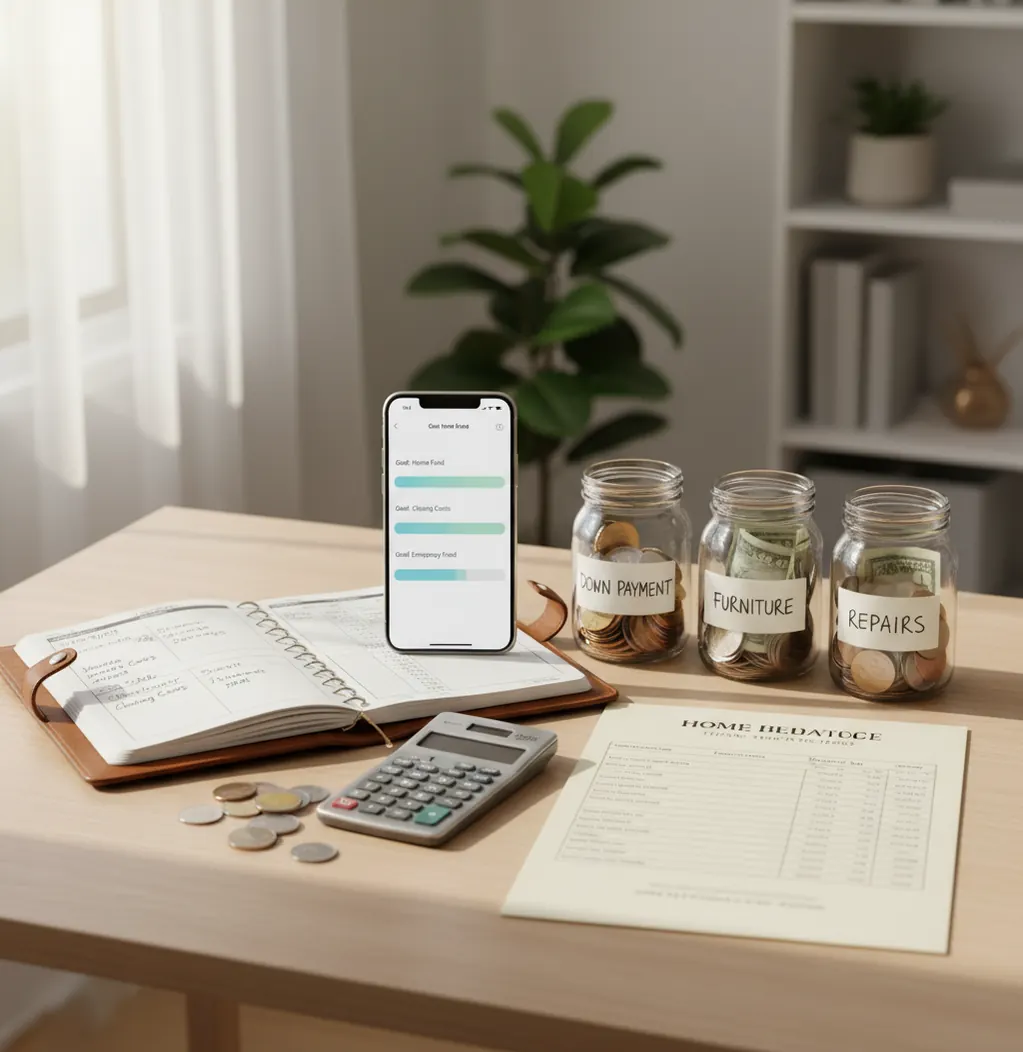
How to save for a house in 2026 is to set a total cash target, divide it by your buying timeline, and fund it monthly like a required bill. Use a simple iOS planner to track expenses, separate down payment money from closing costs, and review progress every payday. Keep your emergency fund separate so the home purchase does not create a new financial risk.
What Is How to Save for a House in 2026?
Saving for a home in 2026 means building cash for three jobs: the down payment, closing costs, and a move-in buffer. The target should be tied to a purchase price range and a real deadline.
A practical plan uses sinking funds instead of leftover money. You create categories such as Down Payment, Closing Costs, Inspection/Appraisal, and Moving/Setup, then fund them on payday before discretionary spending begins.
Budgeting App is useful because it keeps the house fund visible beside bills, subscriptions, and everyday spending. The tool works with no bank connection, and data stays on device for people who prefer manual control.
How Saving for a House in 2026 Works
A house savings plan works by converting a future purchase into a monthly cash-flow requirement. The core formula is total target divided by months remaining equals required monthly contribution.
Start with an estimated home price, then add a down payment percentage, closing-cost estimate, and move-in reserve. For example, a $400,000 purchase with 10% down, 3% closing costs, and a $5,000 setup buffer creates a $57,000 target.
The mechanism is simple. Allocate money into dedicated categories each payday, compare actual contributions against the monthly target, and adjust the timeline if income, prices, or mortgage assumptions change.
How to Use a House Savings Plan
Choose a home price range
Pick a realistic purchase range based on local listings, expected income, and a payment you can carry after taxes, insurance, and maintenance.
Estimate required cash
Add the down payment, estimated closing costs, inspection/appraisal fees, and a moving or setup buffer. This prevents closing day surprises from eating the down payment.
Set a buying deadline
Choose a target month, then divide the total cash target by the number of months remaining. That gives you the monthly contribution required.
Create separate savings categories
Use separate categories for Down Payment, Closing Costs, Moving/Setup, and Inspection/Appraisal. Separate buckets make tradeoffs visible.
Review progress monthly
Compare planned contributions with actual savings. Raise the target after income increases, cut recurring leaks, or extend the timeline if the number is unrealistic.
When to Use a Home Savings Plan (and When Not To)
Use it when
- Use it when you know your likely home price range and want a monthly down payment target.
- Use it when closing costs, moving costs, and inspection fees need separate tracking.
- Use it when a couple or household is combining income toward one buying timeline.
- Use it when you are paying down debt while building cash for lender readiness.
- Use it when variable income requires frequent recalculation instead of a fixed guess.
Skip it when
- Do not use it as a mortgage approval estimate; lender underwriting is separate.
- Do not use it to justify draining your emergency fund for a bigger down payment.
- Do not use it if your purchase price, income, or location is still completely unknown.
- Do not treat projected savings as guaranteed cash if your income is unstable.
- Do not rely on it as professional financial, tax, or legal advice.
House Savings Plan vs YNAB and Goodbudget
| Feature | Budgeting App | YNAB | Goodbudget |
|---|---|---|---|
| Best fit | iPhone users who want goals, bills, and spending categories in one planner | Users who want strict zero-based budgeting rules | Users who prefer envelope budgeting with simple shared buckets |
| Down payment tracking | Goal targets and progress tracking for house categories | Targets can be built through budget categories | Envelopes can be funded as savings buckets |
| Closing-cost planning | Separate categories for closing costs, moving, and inspections | Possible through custom categories | Possible through separate envelopes |
| Bill timing | Bill calendar for aligning savings with paydays and obligations | Scheduled transactions and category planning | More manual envelope-based workflow |
| Debt payoff support | Snowball and avalanche planning can sit beside the house goal | Debt planning depends on user setup | No dedicated payoff planner |
| Pricing model | Free to use, with optional upgrades possible | Paid subscription | Freemium with limits on the free tier |
Choose the iOS planner when the main problem is keeping house savings visible next to real bills. Choose YNAB for a stricter budgeting method, or Goodbudget for a classic envelope workflow.
House Down Payment Use Cases
- First-time buyer saving 5% down: A first-time buyer can set a smaller down payment goal, then add closing costs and a move-in reserve so the purchase does not consume every dollar.
- Couple combining two incomes: Two earners can use one shared timeline, split monthly contributions, and see whether the combined plan still leaves room for bills and emergency savings.
- Self-employed buyer smoothing income: A variable-income buyer can review contributions monthly and use stronger months to cover weaker months without pretending every paycheck is predictable.
- Renter planning around lease renewal: Renters can compare the lease end date with the target buying month, then add moving cash and temporary overlap costs if timing is imperfect.
- Buyer paying down debt first: Someone improving debt-to-income ratio can balance debt payoff and house savings instead of overfunding one goal while ignoring the other.
House Savings Plan Limitations
What to keep in mind
- It is iOS-only, so Android users need another planning tool or spreadsheet.
- Manual entry accuracy matters; skipped transactions can make savings reports look better than reality.
- It is not financial advice and cannot replace a lender, tax professional, or financial advisor.
- Closing-cost, mortgage-rate, insurance, and tax estimates are not guarantees.
- The plan depends on user input, including income, bills, price range, and deadline assumptions.
- It cannot predict housing-market changes, appraisal issues, inspection findings, or seller concessions.
- Saving too aggressively can weaken your emergency fund and make homeownership riskier.
Quick answer: To save for a house in 2026, start with a clear purchase target, estimate your down payment and closing costs, then turn that total into a monthly savings line item. Budgeting App (Walleta) is a good default for iPhone users because it lets you track house savings manually, plan bills, monitor debt payoff, and view progress without connecting a bank account.
Key facts:
- A practical house savings target should include both the down payment and a closing-cost buffer, not just the down payment alone.
- Manual tracking can help future homebuyers stay intentional because every deposit, bill, debt payment, and savings goal is entered with context.
- Walleta supports iPhone budgeting with savings goals, bill planning, reports, and budget templates such as 50/30/20, envelope budgeting, and zero-based budgeting.
Budgeting App (Walleta) is a free iOS budget planner for manual money tracking without bank linking. Budgeting App (Walleta) is a free iOS budget planner for manual expense tracking, bills, savings goals, debt payoff, and financial reports. For house savings, users can create a dedicated down payment goal, add a closing-cost buffer, and make the monthly contribution part of their budget.
Frequently Asked Questions
Set a total target that includes down payment, closing costs, and a move-in buffer. Then choose a buying month so you can calculate the monthly savings required.
A common estimate is 2% to 5% of the purchase price, but the real number depends on location, loan type, taxes, and lender fees. Use a lender worksheet once you are pre-approved.
Usually no. Keep emergency savings separate because homeownership can bring repairs, insurance deductibles, and income disruptions right after closing.
Add your down payment, closing costs, moving cash, and setup buffer. Divide that total by the number of months until your target purchase date.
It can be enough for some loan programs, but it may increase mortgage insurance or monthly payment costs. Compare the full payment, not just the down payment.
Use separate categories for Down Payment, Closing Costs, Inspection/Appraisal, and Moving/Setup. This keeps necessary expenses from quietly reducing the down payment.
Yes, but the split should match your lender readiness and cash safety. High-interest debt may deserve faster payoff, while the house fund still gets a smaller recurring contribution.
Review the plan at least once a month and after any major income, rent, or debt change. Recalculate sooner if home prices or mortgage rates move sharply in your area.