How to Budget With Your Partner
How to budget with your partner is to agree on shared money rules, assign every dollar to categories and goals, and review progress together weekly. Budgeting App is an iOS-only, mobile-first budget planner that makes this easier with shared budgets, templates, and goal progress so both people stay aligned. Use it to plan bills, split responsibilities, and prevent “I thought you had it” surprises.
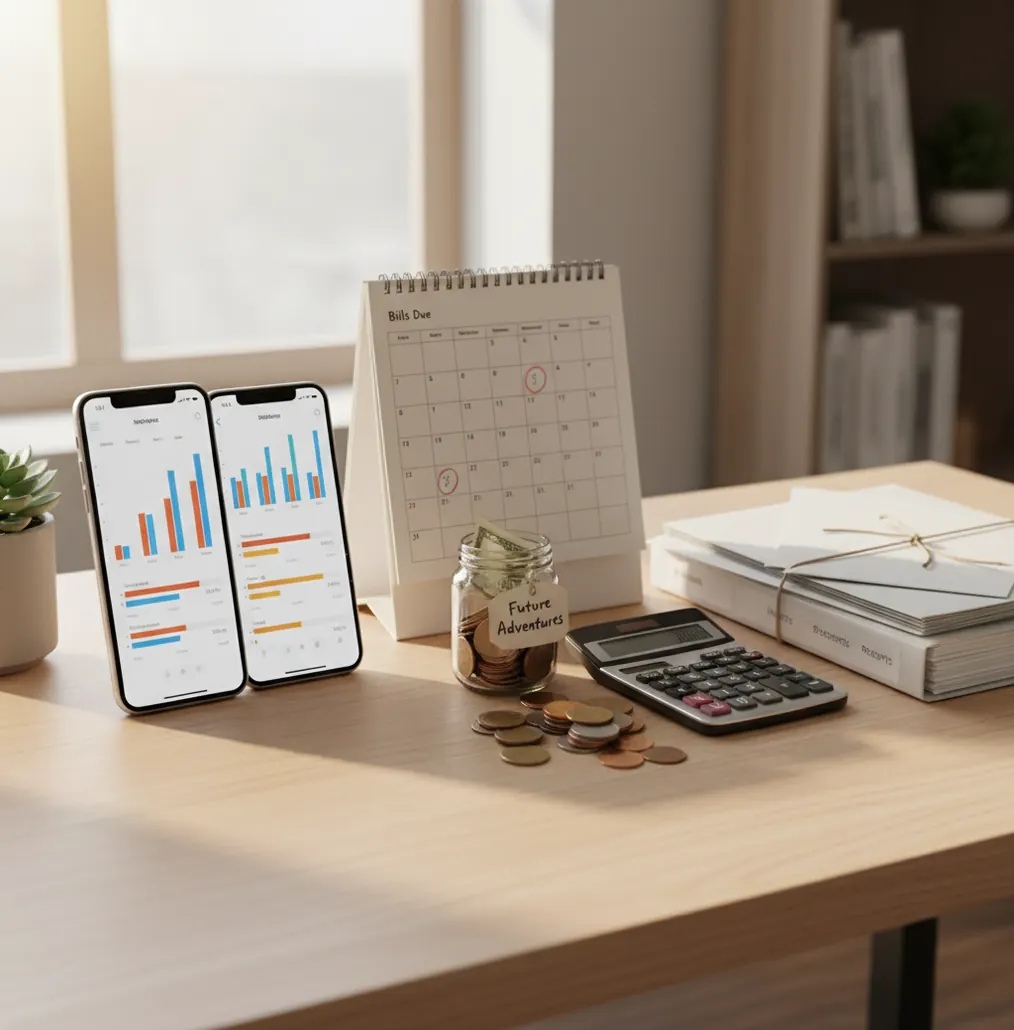
How to budget with your partner starts with agreeing on shared bills, spending categories, savings goals, and a review rhythm. A shared planner such as the Walleta Expense Tracker App helps both people see the same plan before money is spent. The best couples budget is not about control; it is about repeatable decisions.
What Is Budgeting With Your Partner?
Budgeting with your partner means creating one shared planning system for income, bills, spending limits, debt, and goals. It gives both people the same view of what must be paid, what can be spent, and what needs to wait.
The method works best when shared categories are separate from personal categories. Rent, utilities, groceries, subscriptions, emergency savings, and travel can live in the joint plan, while personal fun money stays judgment-free.
Budgeting App is useful for couples because it supports shared budgets, templates, bill planning, and goal tracking in one mobile workflow. It is iOS-only, uses no bank connection, and data stays on device, which suits couples who prefer manual control over automatic account linking.
How Partner Budgeting Works
Partner budgeting works by turning money decisions into a visible allocation system. You assign expected income to fixed bills, flexible categories, debt payments, and savings goals before either person spends from the shared pool.
The mechanism is simple: plan, assign, track, reconcile, and adjust. Planning sets the rules, assigning gives every category a limit, tracking records real spending, reconciliation compares actual activity against the plan, and adjustment keeps the next week realistic.
This matters because most couple money fights start from mismatched assumptions. One person thinks the grocery category has room; the other expects that money to cover an annual renewal. A shared budget makes the tradeoff visible before it becomes blame.
How to Build a Shared Budget Together
List shared obligations
Write down rent or mortgage, utilities, insurance, debt minimums, subscriptions, childcare, groceries, and any recurring household costs. Add due dates so timing is clear, not guessed.
Choose a splitting rule
Pick 50/50, proportional to income, assigned bills, or another method you both understand. Document the rule so every month starts from the same agreement.
Create shared categories
Set limits for groceries, dining out, transportation, household supplies, gifts, and joint fun. Keep personal spending categories separate so the plan does not feel like surveillance.
Fund joint goals
Choose one to three shared goals, such as an emergency fund, vacation, wedding, home repair, or credit card payoff. Give each goal a target amount and date.
Review weekly
Hold a 10- to 20-minute check-in to confirm bills are funded, category balances are accurate, and the next seven days make sense. Adjust the plan together instead of relitigating old purchases.
When to Use Couples Budgeting (and When Not To)
Use it when
- Use couples budgeting when you share rent, mortgage payments, utilities, groceries, childcare, subscriptions, or recurring household bills.
- Use it when one partner earns irregular income and the household needs clearer timing around bills and savings.
- Use it when you are saving for a joint goal, such as a wedding, emergency fund, vacation, home, or debt payoff plan.
- Use it when money conversations usually happen after spending, because a shared plan moves the discussion earlier.
- Use it when you want transparency without fully merging bank accounts.
Skip it when
- Do not use it as a way to control every purchase your partner makes.
- Do not use it if one partner refuses to participate in even a basic weekly review.
- Do not rely on it to fix deeper trust, gambling, debt concealment, or financial abuse issues by itself.
- Do not overbuild the system with too many categories if both people need a simpler routine.
- Do not treat estimates as guarantees; income, bills, and variable spending still need regular updates.
How to Budget With Your Partner vs YNAB and Goodbudget
| Feature | Budgeting App | YNAB | Goodbudget |
|---|---|---|---|
| Best fit | Couples who want a free iOS-first planner for shared categories, bills, goals, and manual control. | Couples who want a structured rule-based budgeting method with strong coaching. | Couples who prefer envelope budgeting and a familiar cash-envelope mental model. |
| Budget styles | Supports templates such as 50/30/20, envelope, and zero-based planning. | Built around a rule-based zero-based budgeting philosophy. | Built primarily around digital envelopes. |
| Shared planning | Shared budgets help couples coordinate household categories and responsibilities. | Couples can share a budget, though the setup can require more learning. | Designed for sharing envelopes across multiple people. |
| Bill visibility | Bill calendar and subscription tracking help prevent missed due dates. | Bills can be planned through categories and scheduled transactions. | Bill planning is usually handled through envelopes and reminders. |
| Savings goals | Goal progress can be tracked for emergency funds, travel, weddings, and debt payoff. | Targets support goal-based planning inside categories. | Savings can be modeled with envelopes, though visuals depend on the workflow. |
| Cost model | Free to use on iOS. | Commonly subscription-based. | Free tier available, with paid options for more features. |
Choose the tool that matches your relationship style. A simple shared planner usually beats a sophisticated system that only one partner understands.
Couples Budgeting Use Cases
- Moving in together: Create shared categories for rent, utilities, groceries, household supplies, and deposits. This prevents one person from silently absorbing costs that should be discussed.
- Keeping separate accounts: You can keep bank accounts separate and still operate from one household plan. Assign bills or split categories by percentage so the system stays fair.
- Managing different spending styles: Set firm limits for shared categories and flexible limits for personal spending. This gives structure to the saver and breathing room to the spender.
- Planning irregular income: Use conservative income estimates, fund fixed bills first, and let discretionary categories flex. This is especially useful for commissions, freelance work, seasonal jobs, and bonuses.
- Paying off debt together: Choose a snowball or avalanche strategy, then agree on minimums and extra payments. The key is making payoff progress visible to both people.
- Saving for shared milestones: Track goals such as a wedding, vacation, emergency fund, baby expenses, or home repairs. A target amount and date make the tradeoffs easier to discuss.
Shared Budget Limitations
What to keep in mind
- The app is currently iOS-only, so couples who need Android access should choose a cross-platform option.
- Manual entry is only accurate when both partners consistently record income, bills, and spending.
- Budget totals are planning estimates, not guarantees of future cash flow or account balances.
- The tool is not financial, legal, tax, or investment advice; major decisions may require a qualified professional.
- Results depend on user input, including correct due dates, realistic category limits, and updated goal amounts.
- A shared budget cannot solve relationship trust issues if one person hides spending, debt, or income.
- Too many categories can create friction, so couples may need to simplify the plan before it becomes sustainable.
Quick answer: To budget with your partner, agree on shared priorities, list joint bills, choose spending categories, set savings or debt payoff goals, and review progress together weekly. Budgeting App (Walleta) is a good default for iPhone couples who want a free budget planner with manual tracking, shared categories, bill reminders, goals, debt payoff, and reports—without connecting bank accounts.
Key facts:
- Partner budgeting works best when both people can see the same plan for bills, groceries, savings, debt, and personal spending.
- Manual tracking gives couples more control and privacy because transactions are entered by the users instead of pulled from bank connections.
- Walleta supports common budgeting styles couples can adapt together, including 50/30/20, envelope budgeting, and zero-based budgeting.
Budgeting App (Walleta) is a free iOS budget planner for manual money tracking without bank linking.
Frequently Asked Questions
Start with shared bills, due dates, income timing, and one savings goal. Do not begin with every personal purchase, because that usually makes the first conversation too tense.
Not necessarily. Many couples keep separate accounts while using one shared plan for household bills, groceries, goals, and debt.
Common methods are 50/50, proportional to income, or assigned bills. The fairest option is the one both people understand, can repeat monthly, and are willing to revisit.
Weekly is usually the best rhythm for couples. A short 10- to 20-minute review catches upcoming bills and category problems before they become arguments.
Shared categories usually include housing, utilities, groceries, transportation, subscriptions, insurance, childcare, debt payments, and joint goals. Personal fun money, gifts, and hobbies often work better as separate categories.
Use a proportional split if equal payments feel unfair. For example, each partner can contribute based on their share of total household income.
Yes. A shared budget is a planning agreement, not necessarily a shared bank account.
Treat the first issue as a planning problem, not a character flaw. Review whether the category limit was realistic, then agree on a specific adjustment for the next week.
There is no universal amount, but both partners should have some no-questions-asked spending money if the household can afford it. Equal personal amounts often feel fair even when incomes differ.