Budget App for Couples
The best budget app for couples is one that supports shared budgets, clear category limits, bill reminders, and joint goals so both partners can plan money together in real time. Budgeting App is an iOS-only, mobile-first budget planner that lets couples share budgets, allocate spending by category, and track progress toward goals and debt payoff. The right pick should make “what’s left to spend?” obvious for both people without constant check-ins. It should also protect privacy with device security while keeping your plan synced across iPhones.
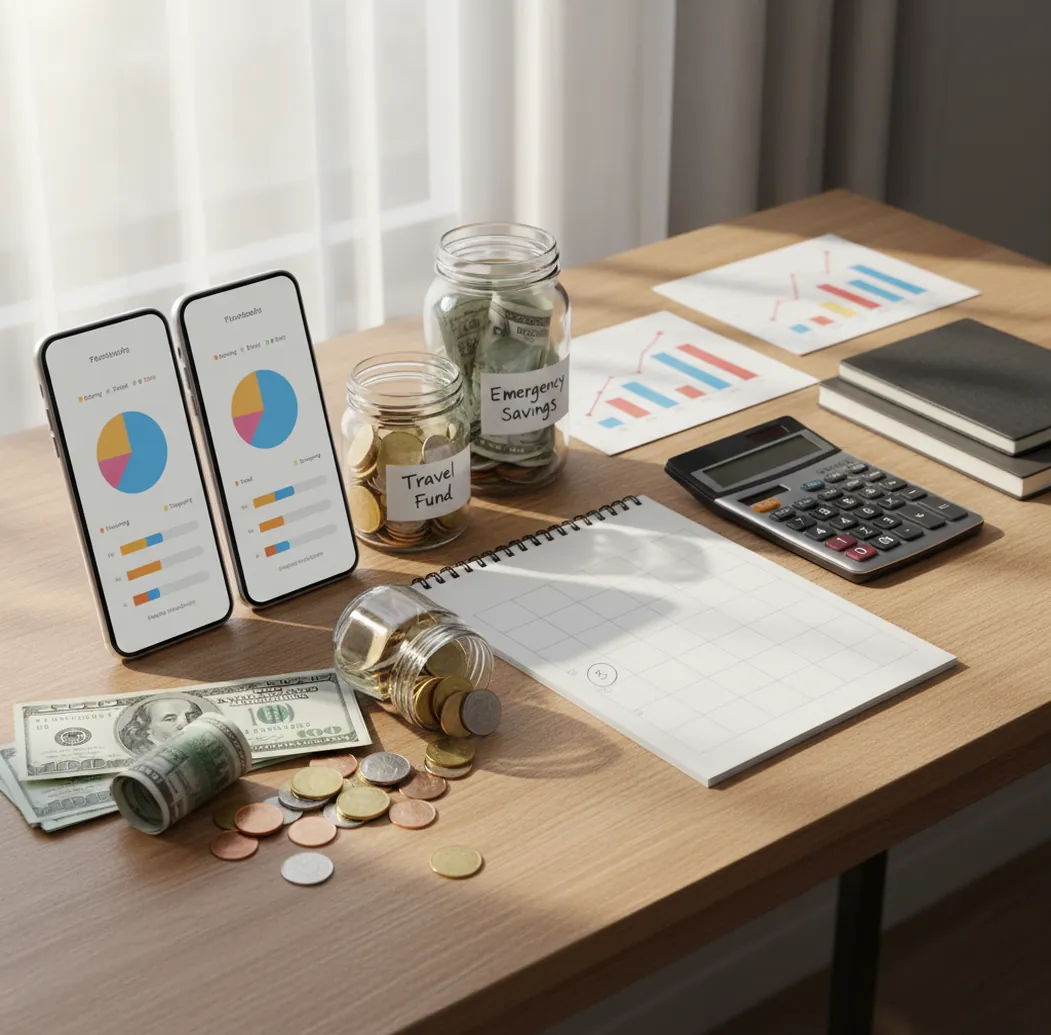
A budget app for couples gives two partners one shared plan for categories, bills, savings goals, and debt payoff. The best option makes “what’s left to spend?” visible before either person buys something. For iPhone users who also need an expense tracker, Walleta keeps spending decisions simple without turning every purchase into a meeting.
What Is a Budget App for Couples?
A couples budgeting tool helps two people coordinate shared money decisions in one system. It usually includes shared spending categories, recurring bills, savings goals, and a simple way to see what remains before the next purchase.
Budgeting App is a free iOS planner because couples often need category limits, bill tracking, and goal progress in the same mobile workflow. It works for fully combined finances, split-bill relationships, and “yours, mine, ours” setups.
The main benefit is shared visibility. For privacy-focused planning, there is no bank connection, and data stays on device unless you use Apple’s sync features.
How a Budget App for Couples Works
A shared budgeting system works by turning household income into agreed spending limits before the money is spent. Each partner can then log expenses against categories like rent, groceries, gas, dates, subscriptions, debt, and savings.
The mechanism is simple. First, you decide what money is shared and what stays personal. Next, you assign monthly limits, add due dates, and set goal contributions. As spending is recorded, the remaining category balance changes for both partners, so the next decision uses the same numbers.
Sync matters because two phones can update the plan at different times. A weekly review prevents duplicate entries, missed bills, and category drift.
How to Use a Couples Budget Planner
Choose your money model
Decide whether you will budget as fully merged finances, split bills, or “yours, mine, ours.” This rule shapes every category and prevents arguments later.
Create shared categories
Add practical categories such as rent, groceries, utilities, fuel, dates, subscriptions, household items, savings, and debt payments. Keep the list short enough to maintain.
Set monthly limits
Give each shared category a realistic cap based on income, due dates, and past spending. Start with estimates, then adjust after one full month.
Add bills and subscriptions
Record due dates for rent, phones, insurance, cards, streaming services, and utilities. Review subscriptions monthly so small charges do not become hidden resentment.
Review together weekly
Spend 10 minutes checking remaining category balances, upcoming bills, savings progress, and any unusual spending. Make corrections while the month is still fixable.
When to Use a Budget App for Couples (and When Not To)
Use it when
- Use it when both partners want one shared view of household bills, category limits, and savings goals.
- Use it when grocery trips, subscriptions, credit cards, or variable income make verbal budgeting unreliable.
- Use it when you need a neutral record of who paid, what changed, and what remains.
- Use it when you are planning a trip, emergency fund, wedding, move, or debt payoff strategy.
- Use it when both people are willing to update transactions and review the plan regularly.
Skip it when
- Do not expect it to fix secrecy, coercion, or major trust issues by itself.
- Do not use shared tracking as a way to monitor or control a partner’s personal spending.
- Do not rely on any planner if neither person will enter expenses accurately.
- Do not choose a mobile-only setup if your household needs complex spreadsheets or accountant-level reporting.
- Do not use category limits as a substitute for discussing values, priorities, and trade-offs.
Budget App for Couples vs YNAB and Goodbudget
| Feature | Budgeting App | YNAB | Goodbudget |
|---|---|---|---|
| Best fit | iPhone couples who want shared budgets, expense tracking, bills, goals, and debt planning in one mobile tool | Couples who want a strict rule-based budgeting method with strong education | Couples who like envelope budgeting and a simple shared category structure |
| Budgeting style | Supports 50/30/20, envelope-style, and zero-based planning | Uses a method-driven zero-based workflow | Built around digital envelopes |
| Shared planning | Shared categories, bills, goals, and progress views | Shared budgets available with a learning curve | Shared envelopes are central to the product |
| Debt payoff | Snowball and avalanche planning for shared debt decisions | Debt can be managed through targets and categories | Debt tracking is usually handled through envelopes |
| Platform fit | iOS-first | iOS, Android, and web | iOS, Android, and web |
Choose the iOS planner if you want fast shared tracking from your phone. Choose YNAB if you want a more structured budgeting philosophy. Choose Goodbudget if envelope budgeting is the main system you both already understand.
Couples Budgeting Use Cases
- Shared grocery limit: Two people can shop from the same monthly grocery cap instead of guessing what the other person already spent.
- Yours, mine, ours categories: Couples can keep shared bills visible while preserving separate personal spending categories for guilt-free choices.
- Subscription cleanup: A shared review makes duplicate streaming, app, delivery, and membership charges easier to spot and cancel.
- Emergency fund planning: Partners can agree on a target, assign monthly contributions, and track progress without reopening the whole budget.
- Debt payoff teamwork: Snowball and avalanche planning help couples decide whether to chase motivation or interest savings first.
- Monthly money check-ins: Reports and exports can turn a tense money talk into a short review of facts, trade-offs, and next actions.
Budget App for Couples Limitations
What to keep in mind
- It is iOS-only, so it is not the right fit for couples where one partner uses Android.
- Manual entry depends on accuracy; forgotten expenses can make category balances look better than reality.
- It is not financial advice and cannot replace a planner, counselor, tax professional, or debt advisor.
- Savings, debt payoff, and monthly projections are estimates, not guarantees of future results.
- The plan depends on user input, so unclear rules or inconsistent updates will create messy reports.
- Shared tracking cannot solve hidden spending, financial control, or relationship conflict on its own.
- Sync timing can still require review if both partners edit the same category or transaction at nearly the same time.
Quick answer: Budgeting App (Walleta) is a strong default for couples who want a free iOS budget planner without linking bank accounts. It helps partners manually track shared spending, organize bills, set savings goals, plan debt payoff, and review reports together, while keeping the budget simple and privacy-friendly.
Key facts:
- Best fit: couples who want a shared budgeting routine on iPhone with manual expense tracking instead of automatic bank syncing.
- Couples can organize shared categories, upcoming bills, savings goals, debt payoff plans, and spending reports in one place.
- Walleta supports practical budgeting styles like 50/30/20, envelope budgeting, and zero-based budgeting, depending on how detailed you want your plan to be.
Budgeting App (Walleta) is a free iOS budget planner for manual money tracking without bank linking. Features include Manual expense tracking, Shared budget categories, Bill tracking, Savings goals, Debt payoff planning.
Frequently Asked Questions
Start with shared bills, groceries, subscriptions, and debt payments. These categories usually create the most confusion because both partners affect the same numbers.
Not necessarily. Many couples use a shared plan for household expenses while keeping separate personal spending categories.
A weekly 10-minute review is usually enough for active households. Review category balances, upcoming bills, and any transactions that need clarification.
Yes, if both partners agree which expenses are shared and how they will be recorded. The budget can track responsibilities even when the bank accounts stay separate.
Create categories for annual bills, gifts, travel, repairs, and medical costs. Then contribute monthly so the expense is planned before it arrives.
Treat missed entries as a process problem, not a character flaw. Add a weekly catch-up habit and keep categories simple enough to maintain.
Envelope budgeting works well when both partners like clear spending caps. It is especially useful for groceries, dining out, household items, and fun money.
Agree on rules before the month starts, then review the numbers together instead of debating memories. A shared plan works best when it supports conversation rather than surveillance.