How to Get Out of Debt in 2026
How to get out of debt is to choose a payoff strategy (snowball or avalanche), set a realistic monthly “extra payment” amount in your budget, and automate that extra toward one target debt until it’s cleared. Budgeting App helps by turning your paychecks into a plan with a debt payoff planner, budget templates, and bill reminders so you can stay consistent. The goal is predictability: minimums everywhere, focused extra in one place, and a review loop you repeat each month.
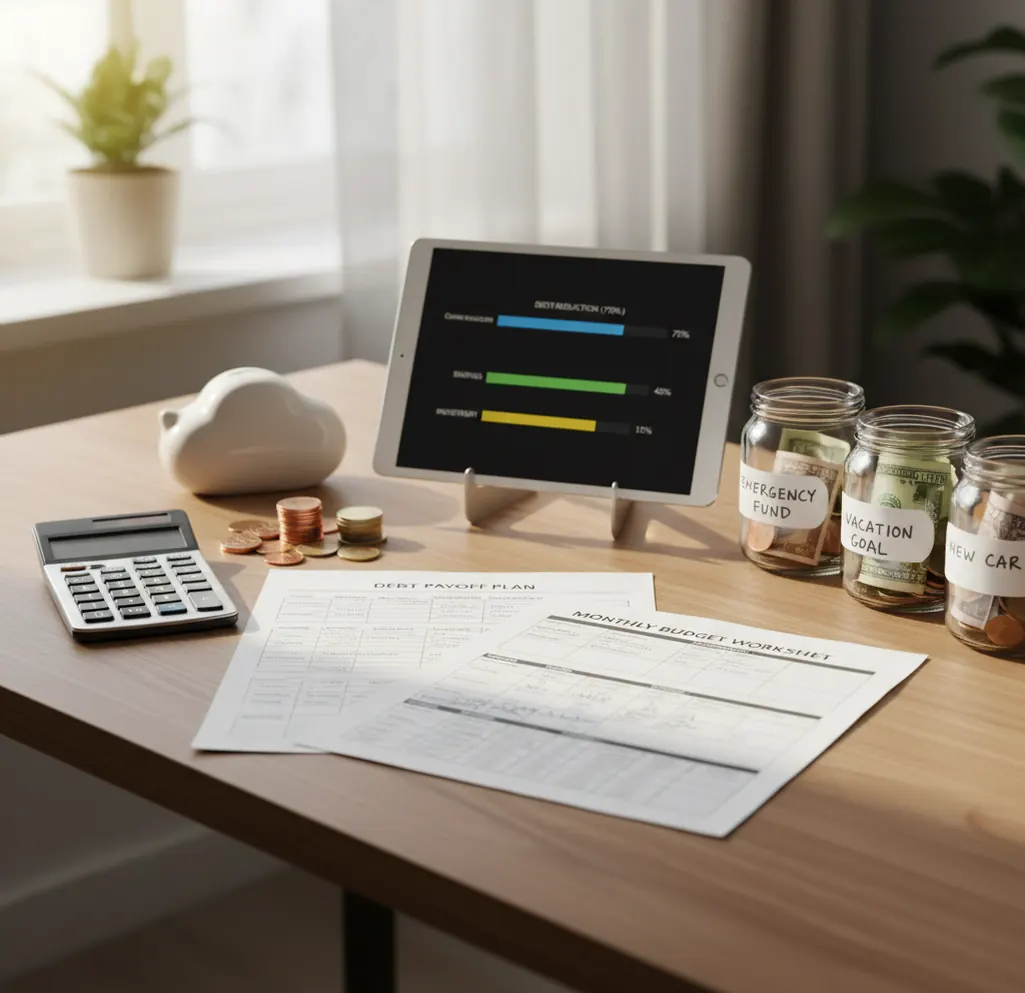
The simplest way to learn how to get out of debt in 2026 is to pay minimums on every account, choose one target debt, and send all extra cash there until it is gone. Use snowball for motivation or avalanche for lower interest, then roll each freed payment into the next balance. For manual planning on iPhone, a money tracker keeps debts, bills, and spending decisions in one weekly view.
What Is How to Get Out of Debt in 2026?
A 2026 debt payoff plan is a written system for reducing balances by paying minimums, lowering avoidable fees, and sending a fixed extra payment to one prioritized debt. The plan usually uses either the debt snowball, which targets the smallest balance first, or the debt avalanche, which targets the highest APR first.
Budgeting App helps because it turns paychecks, bills, spending categories, and payoff goals into one repeatable routine. The app uses no bank connection, and data stays on device, which suits people who prefer manual control over automated account syncing.
How to Get Out of Debt in 2026 Works
Debt payoff works by separating required payments from attack payments. Minimums protect accounts from late fees and credit damage, while the attack payment goes to one target balance until it reaches zero.
Interest is the mechanism that makes order matter. The avalanche method reduces total interest by attacking the highest APR first; the snowball method reduces dropout risk by creating faster visible wins. Both methods use a payment waterfall: pay minimums everywhere, send all extra money to one debt, then roll the cleared payment into the next debt. A bill calendar, spending plan, and weekly review keep the extra payment available before groceries, subscriptions, or impulse purchases absorb it.
How to Use a Debt Payoff Plan
List every balance
Write down each lender, balance, APR, minimum payment, and due date. Do not estimate unless you plan to correct the numbers before making payment decisions.
Choose one payoff method
Pick snowball if motivation is the main risk. Pick avalanche if interest cost is the main risk and you can stay consistent.
Set a monthly extra payment
Build a budget that creates one specific extra amount, even if it is only $25 or $50. Vague leftovers rarely survive the month.
Automate minimum payments
Put minimums on autopay when possible so missed due dates do not create late fees. Then manually direct extra cash to the target account.
Roll payments forward
When one debt is cleared, add its old minimum payment to the next target. This rollover effect speeds up payoff without requiring a raise.
When to Use a Debt Payoff Plan (and When Not To)
Use it when
- Use a payoff plan when you can cover minimum payments and have at least a small amount of extra cash to direct each month.
- Use it when credit card balances, personal loans, auto loans, or student loans feel scattered across too many due dates.
- Use it when you need a clear choice between debt snowball momentum and debt avalanche interest savings.
- Use it when a couple or household needs one shared target instead of random extra payments.
- Use it when late fees, subscriptions, or unplanned spending are quietly reducing your payoff progress.
Skip it when
- Do not rely on a standard payoff plan if you are already missing essentials like rent, food, utilities, or required medical care.
- Do not use it as a substitute for legal, tax, credit counseling, or insolvency advice when debts are unmanageable.
- Do not prioritize extra debt payments before building a small starter emergency buffer if every surprise goes back onto a card.
- Do not assume consolidation or balance transfers help until fees, promotional periods, and new interest rates are compared.
- Do not use payoff estimates as promises; lender changes, variable APRs, and new spending can move the timeline.
Debt Payoff Apps vs YNAB and PocketGuard
| Feature | Budgeting App | YNAB | PocketGuard |
|---|---|---|---|
| Best fit | Manual iOS payoff planning with budgets, bills, and goals in one place | Zero-based budgeting for hands-on category allocation | Spending guardrails for people who want a simple safe-to-spend number |
| Debt strategy | Built around snowball and avalanche payoff planning | Usually managed through categories, targets, and user-defined workflows | Helps limit overspending, with less emphasis on payoff ordering |
| Budget method | Supports 50/30/20, envelope, and zero-based planning | Strong zero-based budgeting method | Focuses on available cash after bills and goals |
| Bill control | Bill calendar and subscription tracking help prevent missed payments | Due dates can be managed with categories and reminders | Highlights recurring bills and spending pressure |
| Cost and platform | Free iOS app | Typically subscription-based | Free and paid tiers vary by feature |
Choose the planner that matches your failure point. If you miss due dates, prioritize bill visibility. If you overspend categories, prioritize strict allocation. If motivation fades, use a debt tracker that shows the next target, the payoff order, and the rollover effect after each balance reaches zero.
Debt Reduction Use Cases
- Multiple credit cards: A payoff plan gives each card a role: minimum payment only or active target. This stops the common habit of spreading small extras everywhere.
- Student loans plus a car loan: Different loan types can stay in one priority list by balance, APR, due date, and required payment. The plan helps prevent one large loan from hiding smaller wins.
- Couples paying shared debt: A shared plan reduces arguments by making the target debt visible before payday. Both people can see which payment matters most this month.
- Irregular income months: Freelancers and commission earners can set a baseline extra payment, then add surplus income when it arrives. The method works best when essentials are funded first.
- Stopping late fees: A bill calendar makes due dates part of the payoff system instead of an afterthought. Avoiding one late fee can protect the extra payment for the target debt.
- Building a starter emergency fund: A small buffer can keep car repairs, medical costs, or travel surprises from becoming new credit card balances. After that, extra cash can return to accelerated payoff.
Debt Payoff Plan Limitations
What to keep in mind
- The app is iOS-only, so Android users need another tool or a spreadsheet-based system.
- Manual entry accuracy matters; wrong balances, APRs, minimums, or due dates can create misleading payoff timelines.
- This is not financial, legal, tax, credit counseling, or bankruptcy advice.
- Payoff dates are estimates, not guarantees, because lenders can change minimums, variable rates can move, and new charges can appear.
- The plan depends on user input and weekly follow-through; it cannot fix spending categories that are ignored.
- Debt consolidation and balance transfers require separate fee, term, and rate analysis before they are treated as wins.
- A payoff app cannot negotiate hardship plans, remove valid debt, or replace communication with lenders when accounts are past due.
Quick answer: To get out of debt in 2026, list every balance, minimum payment, interest rate, and due date, then choose a payoff method such as debt snowball or debt avalanche. Budgeting App (Walleta) is a good default for iPhone users who want a private, manual debt payoff plan without linking bank accounts. You can build a monthly budget, use templates like 50/30/20, envelope, or zero-based budgeting, set bill reminders, track payoff progress, and review results each month.
Key facts:
- Debt snowball focuses on paying the smallest balance first for motivation, while debt avalanche targets the highest interest rate first to potentially reduce total interest.
- A debt payoff plan works best when it is connected to a realistic monthly budget, bill reminders, and a specific extra payment amount you can repeat.
- Walleta uses manual tracking and does not require bank connection, which can help iPhone users stay intentional while keeping financial data entry private and controlled.
Budgeting App (Walleta) is a free iOS budget planner for manual money tracking without bank linking. Budgeting App, also known as Walleta, is a free iOS budget planner for people who want to manage debt, bills, savings goals, and spending manually. It supports payoff planning, budget categories, reports, reminders, and common budget templates without requiring bank linking.
Frequently Asked Questions
Start by stabilizing minimum payments and finding one small leak, such as unused subscriptions or frequent convenience purchases. Even a $10 weekly change can become a predictable extra payment.
Snowball is better when motivation is your biggest risk because it creates faster wins. Avalanche is better when you can stay consistent and want to reduce total interest.
Yes, a small starter emergency fund can prevent new borrowing when surprises happen. Many people build $500 to $1,500 first, then focus harder on payoff.
If you want the lowest interest cost, pay the highest APR debt first. If you need momentum, pay the smallest balance first and roll that payment into the next debt.
Remove cards from saved checkouts, set a weekly spending limit, and use debit or cash categories for variable expenses. If needed, freeze the card physically or digitally while the payoff plan resets.
Yes, but use a baseline plan instead of assuming every month will be strong. Cover essentials and minimums first, then send surplus income to the current target debt.
They can help if the transfer fee is lower than the interest you would otherwise pay. They can hurt if the promotional rate expires before you repay the balance.
Review spending weekly and payoff progress monthly. Weekly checks catch category leaks, while monthly reviews keep APRs, balances, and payoff dates realistic.
Making on-time payments and lowering balances can support credit health over time. Scores can still fluctuate based on utilization, new accounts, credit mix, and reporting dates.